Showing posts with label trastamara. Show all posts

Tuesday, July 22, 2014

Juana la Loca

Philip
Well, my friends, today is the day! You guessed it: it's Philip I of Castile's 536th birthday! On July 22nd, 1478, in Bruges, Flanders (today: Belgium), Philip was born. He was the son of then-future Holy Roman Emperor Maximilian I and Mary of Burgundy. He was nicknamed “Philip the Handsome” because the courtiers were simply astonished at his sheer beauty: he had long, light hair, a prominent under-bite and chin (characteristic of the Habsburg family), a chubby face, a long, thin nose, and a skinny figure. (It's really just a posthumous nickname that stuck.) Later, Philip became one of the worst husbands the history of monarchy has ever known. (Fun fact: King Henry VIII, who definitely takes the crown of being the worst husband of monarchy, admired this man and was his brother-in-law!)

Juana
But Philip couldn't become King by himself; he was to get married! Infanta Juana of Castile was the oldest daughter of Queen Isabella I of Castile and King Ferdinand II of Aragon (she is also the older sister of Katharine of Aragon, King Henry VIII's first wife). A marriage between Philip and Juana would create a strong alliance between the Habsburgs, Philip's family, and the Trastámaras, Juana's family. Not only was the infanta pretty, but she was very bright and lavishly educated. She could understand all of the Romance languages. However, she was also quite emotional and dramatic. She enjoyed spending time alone, perhaps to read, which she did often.

In 1496, Juana arrived in Flanders to see her fiancé. Philip sent his sister, Margaret, to meet her, rather than himself. How romantic. When Philip finally met his fiancée for himself there was an immediate attraction between the two, and they ordered that they'd be married as soon as possible.

Philip
It wasn't a fairy-tale, happily-ever-after marriage. Philip was quite a ladies' man and Juana was very faithful and loyal to her husband. She was possessive over him, and he really did not enjoy that. Juana would throw jealous fits, and Philip would ignore and avoid his heart-broken wife.

The miserable couple arrived in Spain after both of the heirs to the Spanish throne, Juan and Isabel, had passed away. Juana therefore was the new heiress to the Spanish throne. Philip didn't like Spain at all. It was a very religious place, and it bored him to tears. The women were more modest here, and were not interested in coquetting with a married man. Not to mention Philip got very sick. Philip really wanted to go home, but his pregnant wife held him back. So, after a bad fight, he went back to Flanders by himself. Isn't he just a dream husband?

Juana
The depressed Juana wanted to run back to her husband, but her mother wanted her to be properly trained in being Queen. She was locked up in a castle after she really did try to go back to her husband. There she cried over her sleaze-ball husband, who probably didn't even care. He was home in Flanders with his three children, Eleanor, Charles (later becoming Holy Roman Emperor Charles V), and Isabella.

After the birth of her son, Ferdinand, in 1503, she was even more depressed. How can you blame her when her husband was absent during the birth of their child? The sad mother was bitter and sour. She returned to Flanders in 1504. Then she found out that he was now taking a mistress. She became so angry and so jealous that she cut the mistress's hair off. Then Philip hit his faithful, loving, yet jealous wife in the face. (What a jerk head! I hate you, Philip! It took me, like, 10 minutes to digest that terrible fact.) They made up, but they were still very on-and-off.

Philip
Queen Isabella passed away not too long after, and now Juana was Queen. The Royal couple, now in Spain, were unhappier than ever. Ferdinand, Juana's father, and Philip both believed Juana too unstable to rule, with her jealous rage and melancholic attitude—the two, of course, wanted some power for themselves, too. So they wrote a treaty behind her back which deemed her unfit to rule due to mental disability, thus alienating her from any sort of power.

The 28-year-old Philip got sick again in Burgos, Spain. His wife, pregnant again, stayed with him the whole time at his bed-side. Philip had a bad fever with chills, and constantly was sweating. It is speculated that Ferdinand poisoned him, therefore directing all the power towards himself. When her husband closed his eyes for the last time in 1506, you can imagine how grief-stricken she was. It is said that she stayed with the dead body and talked to it all day. I even read that, when it was time for his burial, she suggested that they go at night to make sure other women would not be tempted. They say that she would open the coffin and kiss the remains. Whether these bizarre, macabre stories are true or not, they prove to be what she is mainly famous for today.

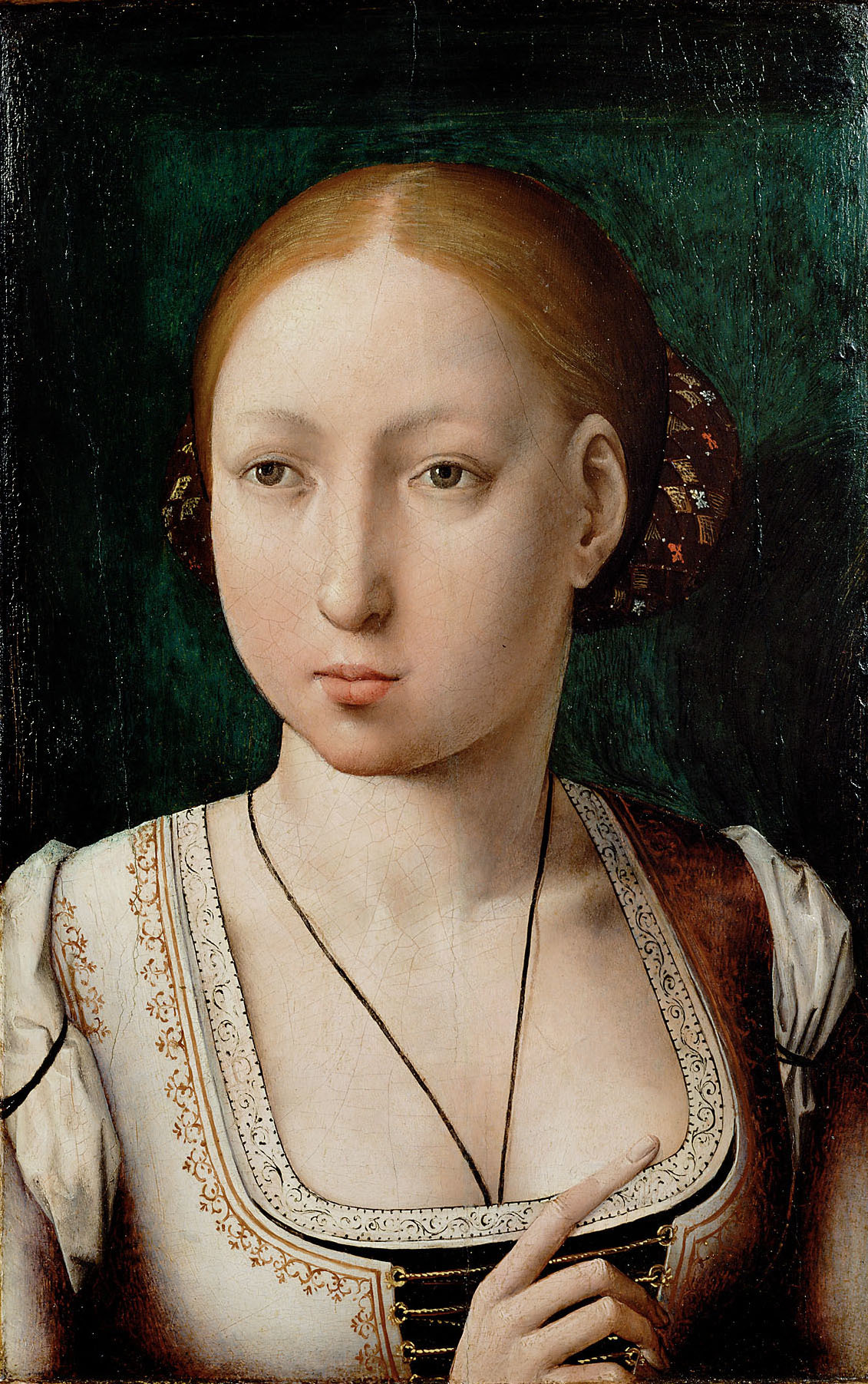
Juana la Loca by Francisco Pradilla Ortiz

Juana was confined to a castle in Tordesillas by her father, who ruled as regent for her. She lived there with her youngest daughter, Catalina. Her other children, Eleanor, Charles, Isabella, Ferdinand, and Mary were home in Flanders, being cared for by their aunt, Margaret of Austria. Juana's father passed away in 1516, and that's when her son, Charles, comes into the picture.

Juana la Loca, imprisoned in Tordesillas by Francisco Pradilla Ortiz

Charles
Charles claimed his inheritance of the throne. He visited his mother and 10-year-old sister in the castle. His mother probably wouldn't be able to recognize him if it wasn't for his humongous Habsburg jaw; he was now a young man. The lonely site of his supposedly mentally unstable mother and his bored sister made him pity them. He wrote to their guardian,“It seems to me that the best and most suitable thing for you to do is to make sure that no person speaks with Her Majesty, for no good could come of it.” (Source)
Juana

In 1525 Catalina moved out to marry King John III of Portugal. The rest of Juana's days she spent alone, depressed and shunned by her entire family. In 1555 the rightful Queen passed away alone in the desolate castle. She outlived her husband by 47 years, being 75-years-old. She is now believed to have had either melancholia or severe clincal depression. Her loyalty is admirable, and I believe she would have been a great Queen if only selfish people didn't use her.
Thursday, July 10, 2014

The Wives of King Henry VIII - Chapter I: Queen Katharine of Aragon

King Henry VIII is undoubtedly one of the most scandalous Kings ever. When beginning a blog about scandalous historical figures, the story of this licentious King is not that bad of a start. So let us begin.
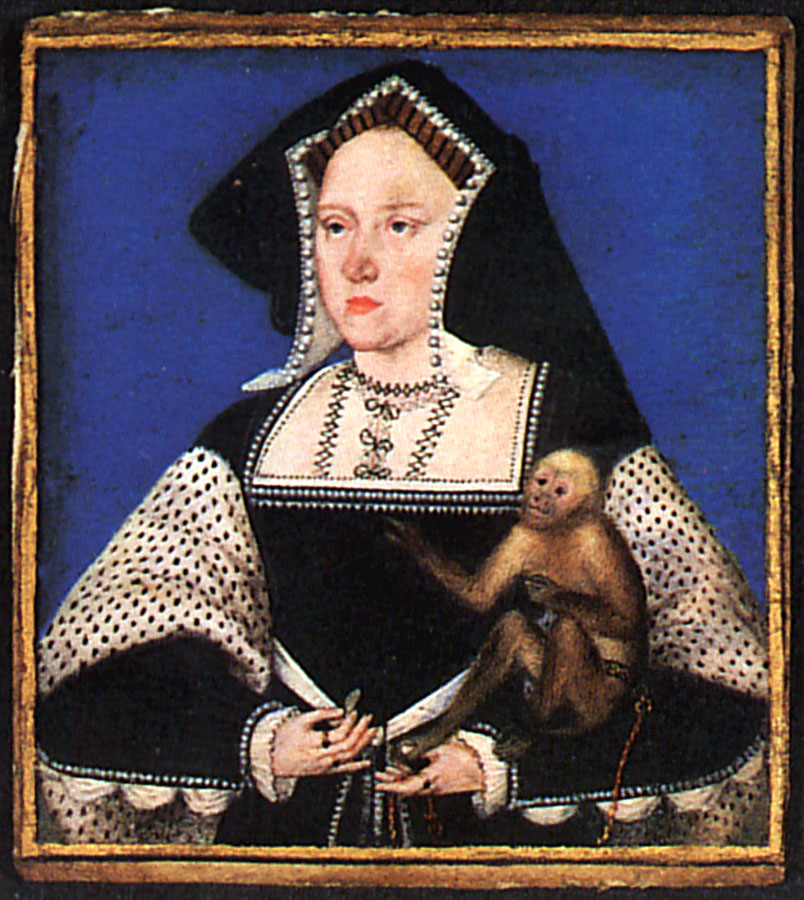
Katharine, c. 1500

Little Henry was the third kid of King Henry VII, the first Tudor King. His older brother, Arthur, Prince of Wales, was heir to the throne. Arthur was betrothed to a beautiful princess named Katharine of Aragon, the daughter of Queen Isabella I of Castile and King Ferdinand II of Aragon. Not only was she beautiful, but she was very well-educated. On the 14th of November, 1501, they were married. This created a great Anglo-Spanish alliance.

As for the marriage itself? Unfortunately, it did not last very long. The young couple were both ill from what is suggested to have been the sweating sickness, a strange disease that had outbreaks during that time. Katharine recovered, but for Arthur, that was not to be. The 15-year-old prince passed away, leaving Henry to be the new heir to the throne.

Although Henry was too young to be married at the time, 14 months after the passing of his brother he was betrothed to Katharine. However, by the time when Henry was old enough to marry, his father then disagreed, not being on good terms with the princess's father. Thus ended the betrothal—at least until 1509.

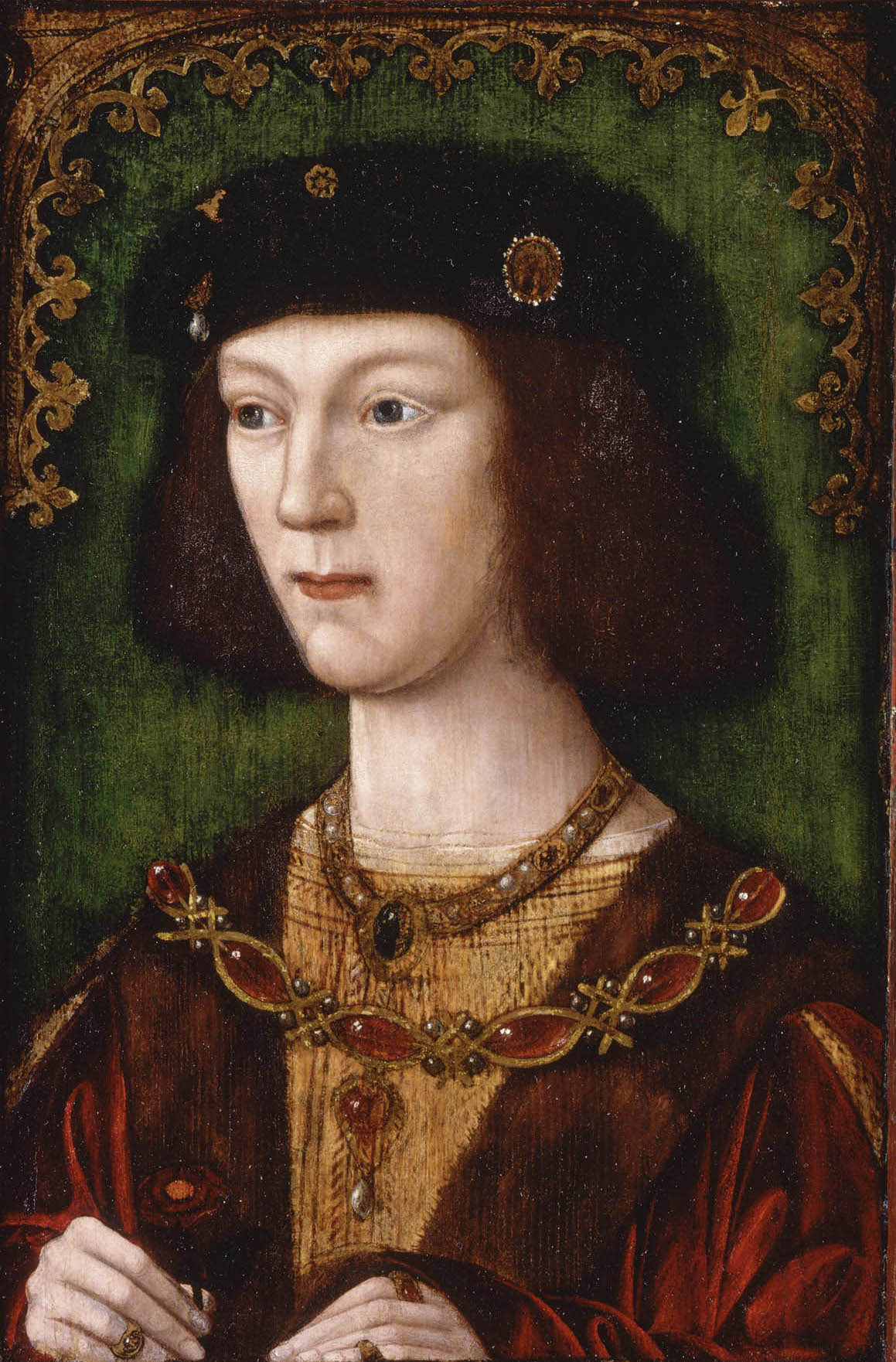
Henry at the time of his marriage
That was the year King Henry VII, the first Tudor King, was reunited with Arthur. The younger Henry was now the King of England. One of his first kingly doings was to marry Katharine and make her his Queen. The wedding ceremony was humble. Their joint coronation, to the contrary, was magnificent. Katharine certainly thought so; she wrote to her father that “our time is spent in continuous festival.” However, the merriness and joviality of the newly married King and Queen was not to last happily ever after.

Katharine sadly gave birth to a stillborn daughter in 1510. In 1511, on New Year's Day, she gave birth to a beaming baby boy named Henry. Hope was not lost; the royal family rejoiced and held festivities in celebration. Seven weeks later, the child passed away. The King was grieved and frustrated; the marriage grew tense. After a miscarriage in 1514, Katharine gave birth to a beautiful and healthy daughter named Mary. The King and Queen were both happy, but in the back of Henry's mind he knew he needed a son. The last pregnancy was recorded in 1518, and no other child was surviving except Mary.

In 1526, the King became infatuated with an attractive and charming woman named Anne Boleyn. She was a lady-in-waiting to Katharine and sister of one of his mistresses, Mary Boleyn. Anne was around 25, pretty and enchanting. Katharine was 42, and she could not have children anymore. Henry desperately needed a legitimate son, and he felt that Anne would be a perfect mother. Anne repudiated his attempts to solicit her, but that made Henry all-the-more enamoured with her.

Henry was reading the Leviticus, and something struck him. It said “if a man marries his brother's wife, the couple will be childless.” (Never mind the fact that they had a lovely daughter.) Henry desperately wanted to annul his loveless, barren marriage. He even began to believe the Queen was cursed. Katharine herself was appalled and insulted at the way her husband acted. (And who can blame her‽) She was a religious woman; divorce was disgraceful. She wrote to her nephew, Emperor Charles V, about it in 1531:
My tribulations are so great, my life so disturbed by the plans daily invented to further the King’s wicked intention, the surprises which the King gives me, with certain persons of his council, are so mortal, and my treatment is what God knows, that it is enough to shorten ten lives, much more mine."

Katharine, c. 1520
The King petitioned to the Pope for annulment while the Queen appealed to the Pope. The battle lasted for six years. Katharine pleaded that she and Arthur had never consummated their marriage—and to her dying day insisted she hadn't—to prove that they were not truly married, in response to Henry's finding in the Leviticus.

In 1533, Anne was pregnant. He could not bear to have another illegitimate son, as it was very difficult for them to succeed their fathers. He went to the Archbishop of Canterbury, Thomas Cranmer, and he granted the annulment of the miserable marriage. Katharine was now considered the Princess Dowager of Wales, and treated like her marriage to Henry never happened.

The Princess Dowager was banished from court. For the rest of her life she lived in very humble castles. Although now officially acknowledged as nothing more than Prince Arthur's widow, she still believed she was the true wife of Henry. Her servants still referred to her as the Queen. When she lived in Kimbolton Castle, she only resided in a single room, which she left only to attend Mass. There she fasted alone. She was forbidden to see or even to send messages to her daughter. The child was officially recognized as illegitimate after the divorce. In 1535, she felt she was going to die soon. She wrote to her nephew, Emperor Charles V, asking him to protect her daughter. Mary was betrothed to him, but the betrothal was broken off later in life and she married his son, Philip II, instead.

To her ex-husband she wrote:
My most dear lord, King and husband,The hour of my death now drawing on, the tender love I owe you forceth me, my case being such, to commend myself to you, and to put you in remembrance with a few words of the health and safeguard of your soul which you ought to prefer before all worldly matters, and before the care and pampering of your body, for the which you have cast me into many calamities and yourself into many troubles. For my part, I pardon you everything, and I wish to devoutly pray God that He will pardon you also. For the rest, I commend unto you our daughter Mary, beseeching you to be a good father unto her, as I have heretofore desired. I entreat you also, on behalf of my maids, to give them marriage portions, which is not much, they being but three. For all my other servants I solicit the wages due them, and a year more, lest they be unprovided for. Lastly, I make this vow, that mine eyes desire you above all things.
Katharine the Quene."
She passed away not very long after. It is said that Henry and Anne wore yellow in celebration of her death. Whether or not they wore yellow in celebration, the King did not attend the funeral and did not allow Mary to go. Today we can conclude that Katharine probably died from cancer of the heart.

Thus passed the faithful first wife of many of the licentious King Henry VIII. I believe her motto, “Humble and Loyal,” really describes her marriage to him. “Nature wronged her in making her a woman,” Thomas Cromwell said of her, “but for her sex she could have surpassed all the heroes of history.” I always think of her as the true wife of Henry.